Real-Time Budget Governance Using ERP
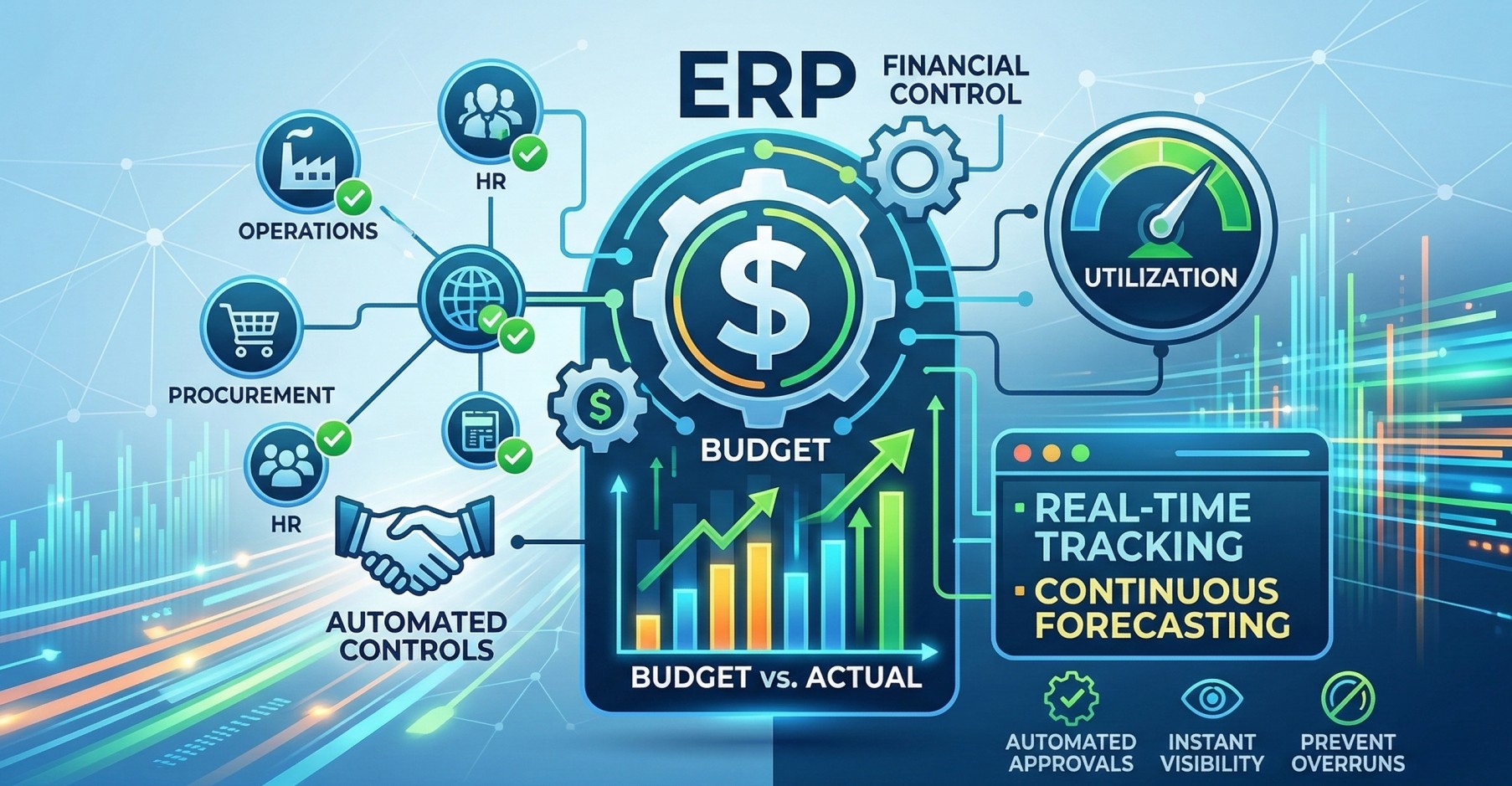
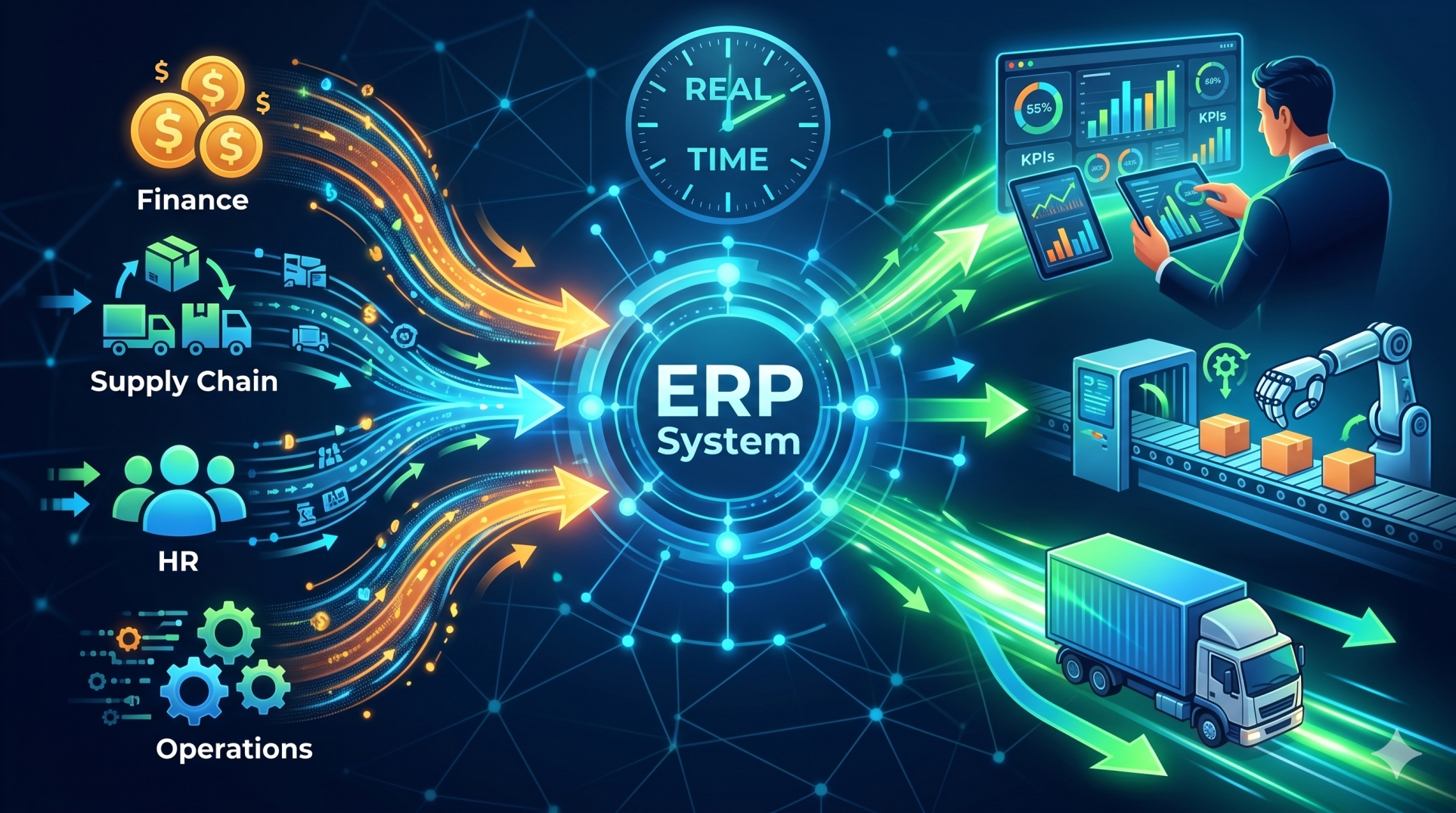
Modern businesses require financial oversight that moves at the same pace as operational activity. Traditional budgeting approaches often rely on periodic reviews and static financial reports, which can delay responses to changing financial conditions. Enterprise Resource Planning (ERP) platforms address this limitation by enabling real-time budget governance. Through continuous monitoring of financial transactions, automated controls, and immediate visibility into spending, ERP systems allow organizations to manage budgets proactively across departments.
1. Establishing a Centralized Budget Framework 🏗️
• Consolidates budgeting data from multiple departments and cost centers 🗂️
• Aligns financial planning with broader organizational goals 🎯
• Standardizes budgeting structures, policies, and rules ⚙️
• Maintains a unified view of allocated, committed, and remaining funds 📊
• Ensures consistency across financial planning activities 🔄
2. Real-Time Tracking of Budget Utilization 📈
• Monitors expenditures as financial transactions are recorded 💳
• Instantly updates budget balances across departments and projects 🔄
• Highlights differences between planned budgets and actual spending 📊
• Provides immediate insight into ongoing financial performance 👀
• Eliminates delays associated with manual reconciliation processes ⏱️
3. Automated Budget Control Mechanisms 🛡️
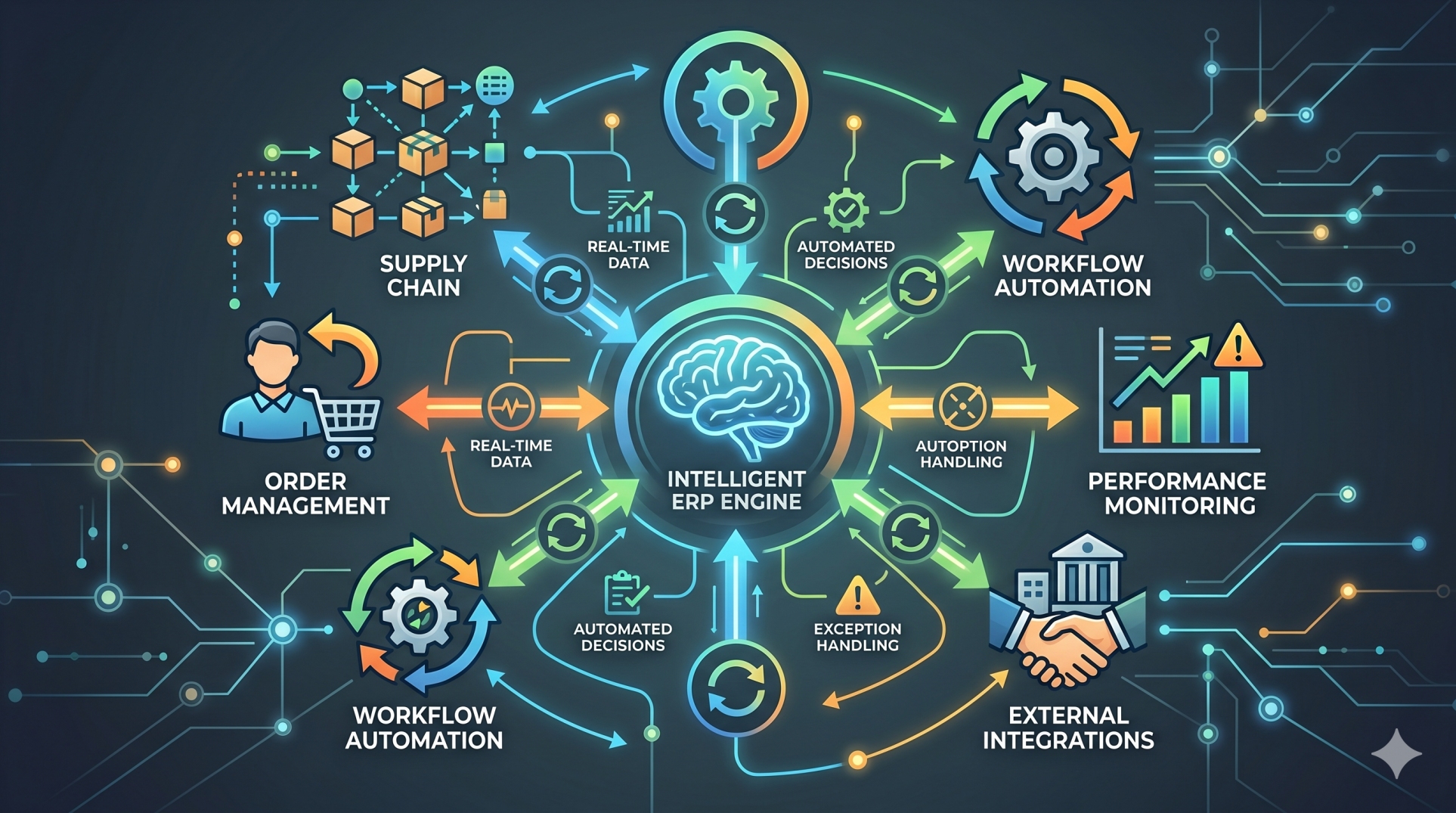
• Applies predefined spending limits and approval workflows ⚙️
• Flags transactions that exceed approved budget allocations 🚨
• Prevents unauthorized or unexpected financial commitments ❌
• Reinforces adherence to internal financial policies 📋
• Minimizes the likelihood of budget overruns 📉
4. Role-Based Financial Visibility 👥
• Delivers customized financial dashboards for different stakeholders 📊
• Allows department managers to track their allocated budgets 👤
• Provides finance teams with a comprehensive organizational overview 🧠
• Enables executives to review strategic financial indicators 🏢
• Promotes transparency throughout financial operations 🔍
5 Real-Time Alerts and Exception Management 🚨
• Sends notifications when spending approaches predefined thresholds ⚠️
• Detects unusual or unexpected financial activities 🔎
• Allows finance teams to intervene quickly when issues arise ⚡
• Reduces the risk of unnoticed budget deviations 📉
• Strengthens responsiveness to financial risks and anomalies 🛡️
6. Integration with Operational Workflows 🔗
• Connects budget monitoring with procurement and project management processes 🏗️
• Confirms budget availability before purchase approvals are granted ✔️
• Links operational activities directly to financial impact 💰
• Reduces gaps between financial planning and operational execution 🔄
• Improves coordination between finance and operational teams 🤝
7. Continuous Financial Forecasting 🔮
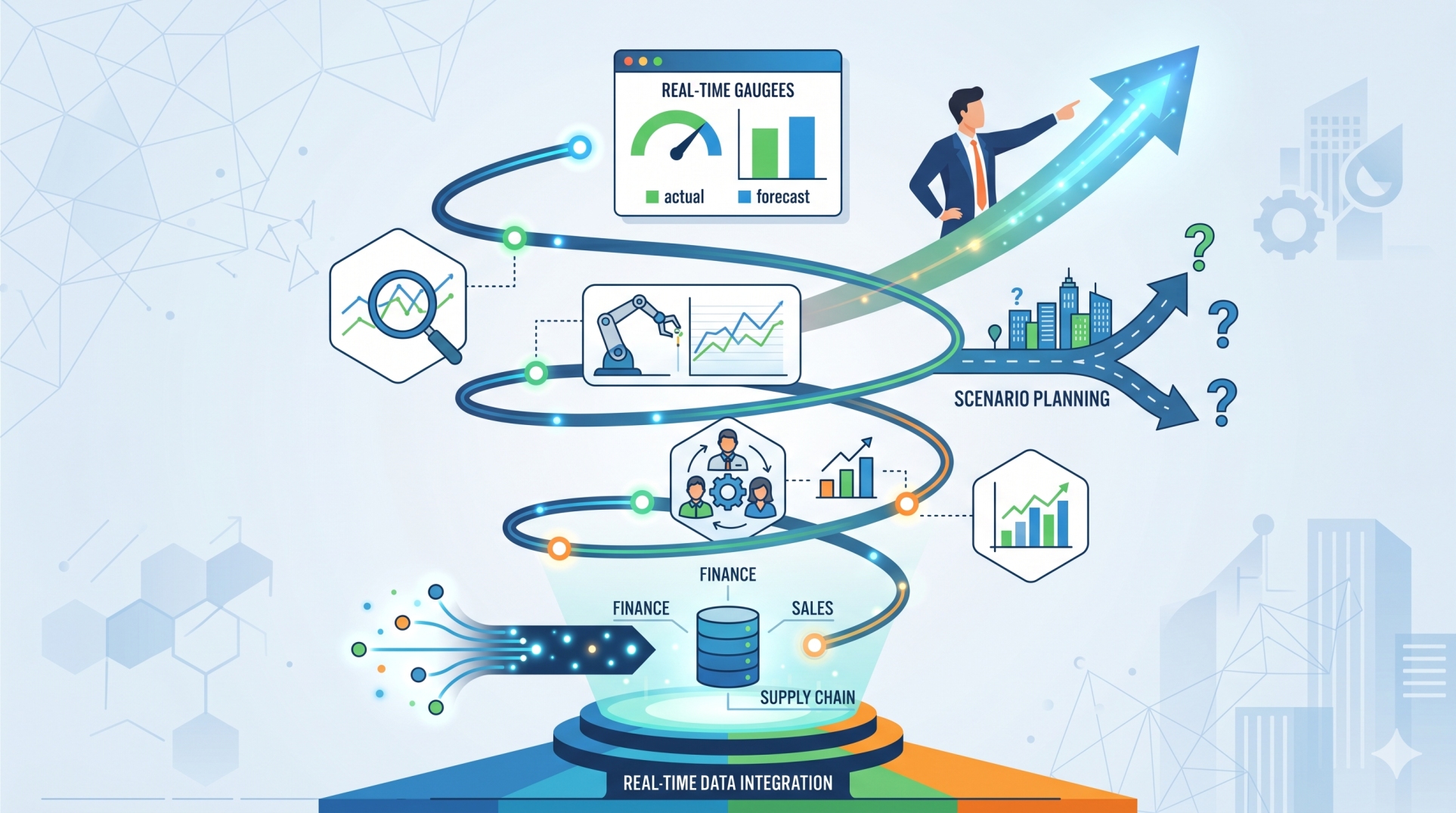
• Uses current financial data to dynamically update budget projections 📊
• Identifies emerging spending trends and cost patterns 📈
• Supports rolling forecasts instead of fixed annual budgets 🔄
• Enables proactive financial planning adjustments 🧠
• Strengthens long-term resource allocation decisions 🏗️
8. Strategic Financial Oversight 🏆
• Ensures budget allocations remain aligned with strategic priorities 🎯
• Gives leadership clear insight into spending patterns across the organization 📊
• Enables faster and more informed financial decisions ⚡
• Reinforces accountability and ownership among departments 🤝
Conclusion
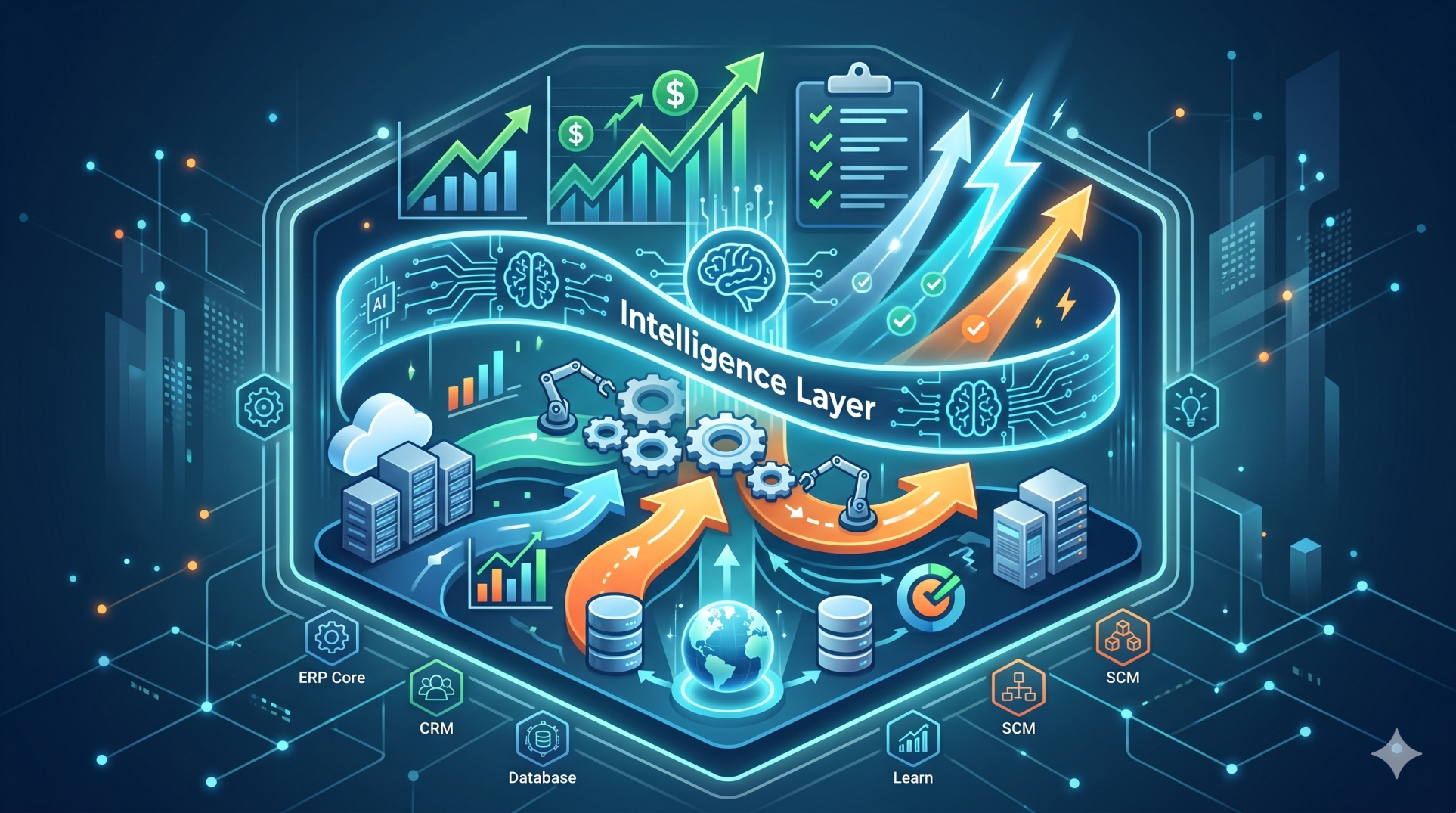
ERP platforms transform budgeting from a periodic review activity into a continuous governance capability. By combining real-time financial monitoring, automated controls, and integrated operational workflows, ERP systems allow organizations to maintain strong financial discipline while remaining adaptable. Real-time budget governance ensures that spending decisions remain aligned with strategic objectives, helping organizations manage resources effectively in dynamic business environments.
See more blogs
You can all the articles below