ERP Launch Support: Ensuring a Smooth Transition

Implementing an Enterprise Resource Planning (ERP) system is a significant milestone, but the success of the project depends heavily on what happens during and after deployment. Effective ERP launch support helps organizations minimize disruptions, maintain business continuity, and ensure employees can confidently adopt new processes. A structured transition strategy enables businesses to maximize the value of their ERP investment while reducing operational risks.
Step 1: Preparing for Go-Live 🚀
• Confirm that all critical business processes are ready for deployment ✅
• Validate system configurations and business workflows ⚙️
• Complete final user acceptance testing before launch 🧪
• Ensure backup and recovery plans are in place 💾
• Communicate the launch schedule to all stakeholders 📢
Step 2: Verifying Data Readiness 📊
• Confirm successful migration of business data 📂
• Validate data accuracy, completeness, and consistency ✔️
• Review customer, supplier, inventory, and financial records 📋
• Resolve data discrepancies before production use 🔍
• Ensure secure handling of sensitive business information 🔐
Step 3: Supporting Users During Launch 👥
• Provide real-time assistance for employees using the new ERP 💬
• Establish dedicated support channels for issue reporting 📞
• Deliver quick guidance for common user questions 📘
• Encourage feedback to identify improvement opportunities 📝
• Build user confidence through responsive support 🤝
Step 4: Monitoring System Performance 📡
• Track application performance throughout the launch period 📈
• Monitor transaction processing and response times ⚡
• Verify integration between connected business systems 🔗
• Detect and resolve issues before they affect operations 🚨
• Maintain continuous visibility into system health 🖥️
Step 5: Managing Operational Risks 🛡️
• Identify potential disruptions before they escalate ⚠️
• Activate contingency plans when necessary 🔄
• Prioritize resolution of business-critical issues 🎯
• Coordinate response efforts across technical and business teams 🤝
• Protect business continuity during the transition 📦
Step 6: Strengthening Communication 📢
• Keep employees informed of system updates and progress 📲
• Share issue resolutions and operational guidance promptly 📨
• Coordinate activities between project teams and business units 👨💼
• Maintain transparency throughout the launch process 🌐
• Encourage collaboration across departments 🤝
Step 7: Tracking Adoption and Performance 📈
• Monitor user adoption across departments 👀
• Evaluate workflow efficiency after deployment ⚙️
• Measure operational improvements against project objectives 📊
• Collect user feedback for ongoing optimization 📝
• Identify additional training requirements where needed 🎓
Step 8: Key Launch Support Priorities ⭐
• Stable and reliable ERP performance ⚙️
• Responsive support for end users 🤝
• Accurate business data and seamless workflows 📂
• Continuous monitoring throughout the transition 📡
Step 9: Addressing Post-Launch Challenges 🔄
• Resolve unexpected issues quickly and efficiently 🛠️
• Fine-tune configurations based on operational feedback ⚙️
• Optimize workflows to improve productivity 📈
• Monitor integrations for consistent performance 🔗
• Strengthen processes through continuous improvement 💡
Step 10: Establishing Long-Term ERP Success 🌟
• Develop ongoing support and maintenance strategies 🏗️
• Schedule regular system reviews and health checks 📅
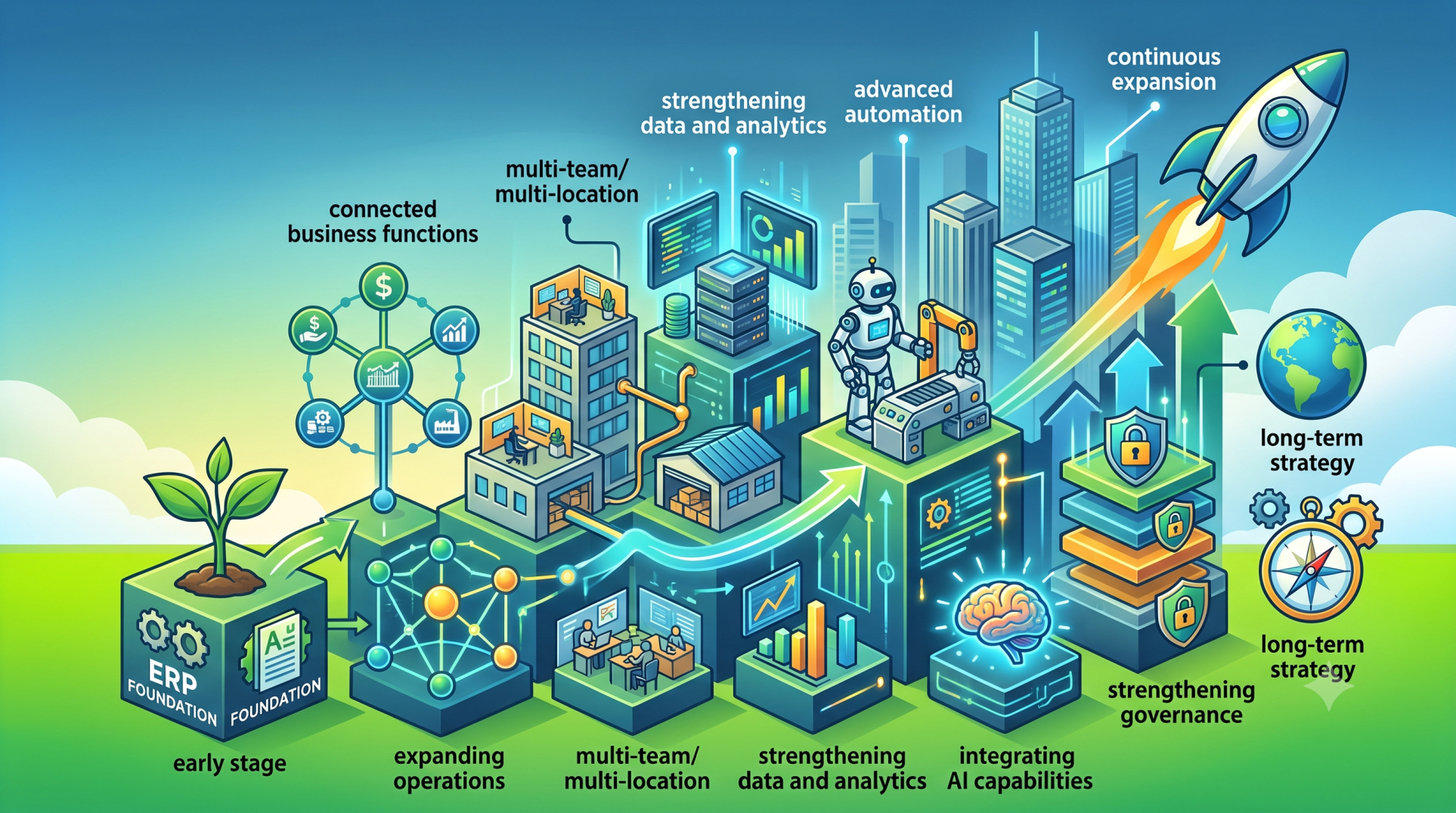
• Expand ERP capabilities as business needs evolve 🚀
• Keep users informed about new features and enhancements 📘
• Continuously improve business processes through ERP innovation 🌍
Conclusion
ERP launch support is essential for ensuring a smooth and successful transition from implementation to daily operations. By combining thorough preparation, proactive monitoring, responsive user support, and continuous optimization, organizations can reduce deployment risks and accelerate user adoption. A well-managed ERP launch not only minimizes operational disruption but also lays the foundation for long-term business efficiency, collaboration, and growth.
See more blogs
You can all the articles below